
How do you choose your olive oil?
We’ve all been swayed by special offers, a fancy brand or gorgeous packaging — but when it comes to the best olive oil, it’s what’s inside the bottle that counts.
We know it’s confusing. Some bottles are overloaded with olive oil claims, including cold-pressed, extra-virgin, or early harvest dates. Do they mean anything?
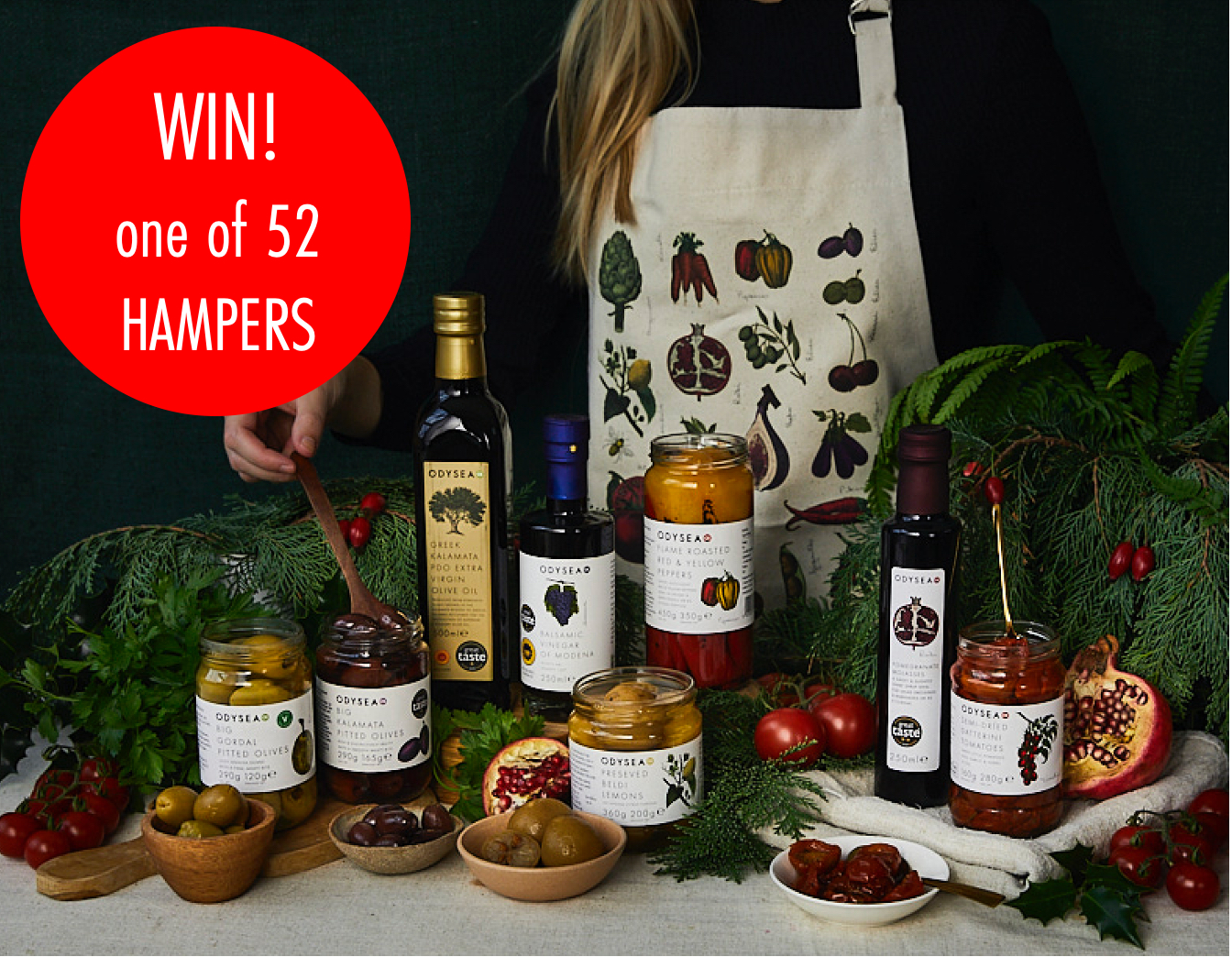
This olive oil guide has (almost) all the answers, so you can guzzle that liquid gold in peace. And if you’re feeling lucky, scroll to the bottom for your chance to win an Odysea Greek hamper worth £50 every week for the next year(T&C’s apply)
- How to choose the best olive oil
- What’s the difference between olive oil, virgin, and extra virgin olive oil?
- Tips for using olive oil
- What is Extra Virgin Olive Oil?
- What is ‘cold-pressed’ olive oil?
- How to store olive oil
- Can I cook with extra virgin olive oil?
- What are polyphenols?
- What is PDO and PGI olive oil?
- Does the harvest date matter for olive oil?
- What does a good EVOO taste like?
- How to win an Odysea Greek hamper worth £50
How to choose the best olive oil?
Keep an eye out for these key details to find the best olive oil:
- Extra virgin olive oil: for the ultimate flavour, extracted without heat or chemicals.
- Dark glass bottle or tin: which protects the oil from light and air.
- PDO or PGI status: guarantees it’s made in one region using specific production methods and olive varieties to create a unique sensory profile.
- Harvest date: indicates freshness and when the olives were picked.
- Avoid olive oils of unknown or multiple origins: to ensure the quality is traceable. These oils might say ‘a blend of oils from more than one country’ or ‘of EU & Non-EU origin’.
What is Extra Virgin Olive Oil (EVOO)?
Think of extra virgin olive oil like fresh olive juice. It’s the first extraction from the harvest, and is the most pure, distinctive and high-quality expression of olive oil there is.
Traditionally olive oil was made by pressing olives, but modern producers use a continuous-cycle milling machine, which is more efficient and quality controlled. Once harvested, olives are crushed into a thick paste including the skin, flesh and pits. The olive oil is extracted from the paste by centrifugation (which means it’s whizzed around really fast, until the oil naturally separates from the solids and water). No heat or chemicals are used.
What’s the difference between olive oil, virgin olive oil, and extra virgin olive oil?
It’s all down to processing and purity. Olive oils are graded by the International Olive Oil Council, which is the global body that sets quality standards across the industry:
- Extra virgin olive oil (EVOO) is the first extraction. It’s not processed with heat or chemicals, and tends to have a richer colour and stronger grassy or peppery taste, with higher polyphenol levels. Extra virgin olive oil must have an acidity below 0.8%, which is a big thumbs up for quality, as it indicates the olives were healthy and processed quickly for a purer taste.
- Virgin olive oil flunks the grade for EVOO. It’s still extracted by mechanical means, without chemicals or heat, but it will have a higher acidity (between 0.8% and 5%). This second-grade virgin olive oil has less demanding legal specifications in terms of the taste, flavour and aroma..
- Olive oil is typically refined olive oil that is decolourised, deodorised and de-acidified with the use of heat then blended with extra virgin olive oil to create a neutral flavoured oil. The oil will be more or less intense depending on the amount of extra virgin olive oil added. Olive oil marketed as ‘light in taste and colour’ indicates it has less extra virgin olive oil.
Tips for using olive oil
- Extra Virgin Olive Oil is the best choice for dressings, dips, and drizzling due to its rich, robust flavour, we like to use it for the perfect Greek salad dressing.
- Virgin Olive Oil has a milder flavour making it a versatile choice best suited to cooking, marinades and light grilling or sautéing – we like to use our Karyatis virgin olive oil for frying eggs or making pesto.
- Olive Oil is best for frying, roasting and baking. The neutral flavour of this oil means it won’t overpower the flavour of your dishes. We like to use our Karyatis olive oil for home-made mayonnaise.
What is Cold-Pressed Olive Oil?
In short, it’s marketing. All extra virgin olive oil must be cold-extracted below 27°C to be legally described as ‘extra virgin’. Just like we wouldn’t claim our olives are uniquely ‘vegetarian’, as they’re already plant-based by nature! You’ll see cold-pressed claims splashed across a lot of extra virgin olive oil, but really they’re just stating the obvious. In fact, most olive oil isn’t even ‘pressed’ in the first place, but is extracted, using more advanced mechanical means to preserve quality.
How to Store Olive Oil
Olive oil is best stored in a dark glass or tin container. Keep it in a cool, dark cupboard, rather than on the shelf, preferably away from the variable heat of the oven. Buying olive oil in larger tins can be more cost effective, and you can decant a small amount into a dark glass bottle or squeezy bottle to use immediately.
Guzzle your best olive oil as quickly as you can. Polyphenol content naturally deteriorates over time, so extra virgin olive oil is best consumed within one to three months of opening the bottle to maximise its nutrients and flavour.
Can I Cook with Extra Virgin Olive Oil?
Yes, absolutely. Extra virgin olive oil is fundamental to the Mediterranean diet, which is associated with a long history of longevity and improved health across the Mediterranean. Extra virgin olive oil plays a role in the diet by providing an excellent antioxidant for good health.
Extra virgin olive oil can be used to roast, grill, fry, or bake, as well as in salad dressings and to drizzle over finished dishes. It is versatile, stable and adds a distinct, rich flavour making it a great choice for enhancing the taste of Mediterranean style cooking
The whole ‘smoking point’ thing is a myth. Extra virgin olive oil does not ‘burn’ or taste bitter when heated. This misconception stems from olive oil’s relatively low smoking point (204°C) compared to sunflower oil’s 225°C, or rapeseed oil’s 230°C — but most home cooking doesn’t take olive oil to that higher temperature anyway. So get cooking!
What are Polyphenols?
We like to think of polyphenols as super-heroes – they act as an antioxidant and contribute to the protection of blood lipids from oxidative stress.
Polyphenols are natural compounds found in olive oil, particularly extra virgin olive oil, that contribute to its flavour, aroma, and quality. These compounds are part of a larger group of plant-based antioxidants and are responsible for the slightly bitter or peppery taste that is characteristic of high-quality olive oils. In addition to enhancing the sensory experience of the oil, polyphenols also play a role in its stability and shelf life, helping to preserve the oil’s freshness and prevent oxidation over time. The concentration of polyphenols can vary depending on factors such as olive variety, harvest time, and production methods.
Good extra virgin olive oil should give a friendly little tickle at the back of your throat, as this demonstrates a high level of polyphenols which create those stronger peppery notes. When using really good olive oil, treat it like adding a twist of fresh black pepper, as it opens up multiple layers of flavour and seasons the dish.
When mentioning the amount of polyphenols in olive oil it must contain at least 250mg polyphenols per kilo of olive oil. Odysea Good For You Polyphenol Extra Virgin Olive Oil harvested in 2023/24 had an astounding 570mg of polyphenols per kilo of oil at the time of packing. Polyphenols deteriorate over time, so be sure to enjoy your oil before the sell by date; drizzle it on salads or to feel extra virtuous sip 1.5 tablespoons per day for maximum benefit.
What is PDO and PGI Olive Oil?
PDO (Protected Designation of Origin) and PGI (Protected Geographical Indication) are both certifications of origin. PDO is more strict, with specific geographical and production requirements, whilst PGI enables more flexible sourcing, whilst still maintaining regional identity and quality.
- PDO (Protected Designation of Origin) guarantees that every stage of the production process — from where the olive trees are planted, to extracting the oil — takes place in a specific area. To be called PDO Kalamata extra virgin olive oil, for example, it must be made entirely within the Kalamata region using at least 95% ‘Koroneiki’ olives and following strict traditional methods. The flavour, aroma and texture of the oil are key factors in this certification, and reflect the regional ‘terroir’ and local olive varieties.
- PGI (Protected Geographical Indication) while still a quality marker, covers a wider area and allows for more flexibility in production steps, while ensuring the oil still reflects its regional identity. At least one stage of production (growing, processing, or preparing) must occur in the designated region. PGI olive oils, like Odysea Extra Virgin Olive Oil from Crete PGI Chania is made from olives grown in the broader area of Chania Western Crete, which is also processed and packaged locally.
Does harvest date matter for olive oil?
Like all fresh produce, olive oil is best enjoyed sooner rather than later. The harvest date refers to when the olive oil was extracted, which is a good indication of how fresh it is. ‘Early harvest’ olive oils are extracted from green olives early in the season to create more aromatic and pungent oils and are usually higher in polyphenols than those harvested later in the season.
Olives are harvested once a year, between October and December, depending on the area, variety, altitude and weather conditions each year. Harvesting begins when the olives turn colour from green to a light brownish black. Green olives tend to have a higher polyphenol content and stronger bitter/spicy flavours, whereas black olives have a more mellow and sweeter flavour.
What does a good EVOO taste like?
A high-quality extra virgin olive oil will reflect the freshness and variety of olives it’s made with, as well as its unique geographical region of origin. To get the stamp of approval, extra virgin olive oil must undergo chemical and organoleptic sensory testing by certified panels.
These are the common flavour notes they’re looking for:
1. Fruity: Olives are a fruit, after all. Like all fresh produce, the taste changes depending on when the olives are picked.
- Green Fruitiness: Think fresh olives, green grass, or even artichoke, tomato or apple. This flavour profile especially comes from olives harvested earlier in the season.
- Ripe Fruitiness: From later harvests, you might taste ripe tropical fruits, berries, or ripe olives.
2. Bitter: pungency and a slight bitterness indicate freshness and lots of healthy polyphenols in olive oil.
- Stronger flavours might be felt on the sides of the tongue.
- It’s typical of high-quality extra virgin olive oils, especially from greener, early harvest olives higher in the polyphenol called oleuropein.
3. Peppery: sometimes described as an oil’s ‘bite’.
- A strong peppery or spicy sensation, often felt in the throat.
- This is a sign of fresh, high-quality olive oil, and indicates lots of good-for-you polyphenols.
- The pungency should be pleasing, and not overwhelming.
Fruity, bitter, and peppery notes should be harmonious and well balanced in a good olive oil, with one characteristic never overwhelming the others.
Get ready to enjoy top-quality olive oil and don’t forget to enter our competition to win an Odysea Greek hamper worth £50! (we’re giving away one hamper every week until 1.11.25 ts&cs apply)